The Reality of Sexual Violence
Sexual violence affects millions of people each year in the United States. Understanding the facts is an important step toward prevention, awareness, and support for survivors.
1 in 5 Women
One in five women in the United States has experienced attempted or completed rape in her lifetime.
1 in 33 Men
One in 33 men in the United States has experienced attempted or completed rape.
Every 68 Seconds
Someone in the United States is sexually assaulted approximately every 68 seconds.
Over 400,000 Survivors Each Year
More than 430,000 people age 12 and older experience sexual assault annually in the United States.
Most Victims Know the Perpetrator
Approximately 80% of sexual assaults are committed by someone known to the victim, such as a family member, partner, acquaintance, or friend.
Younger People Face the Highest Risk
While the majority of sexual assault victims are under the age of 30, sexual violence can happen to anyone at any age.
Sexual Assault Is One of the Most Underreported Crimes
Most rapes are never reported to law enforcement. Current numbers from the Bureau of Justice Statistics report that 70 - 75% of assaults are never reported.
Justice Is Rare
For every 1,000 sexual assaults:
310 are reported to police
50 lead to arrest
28 lead to felony conviction
25 lead to incarceration
This means that less than 3% of perpetrators will ever spend time in jail for their crime.
If you or someone you know has experienced sexual violence, you are not alone. Help is available.
National Sexual Assault Hotline: 800-656-HOPE
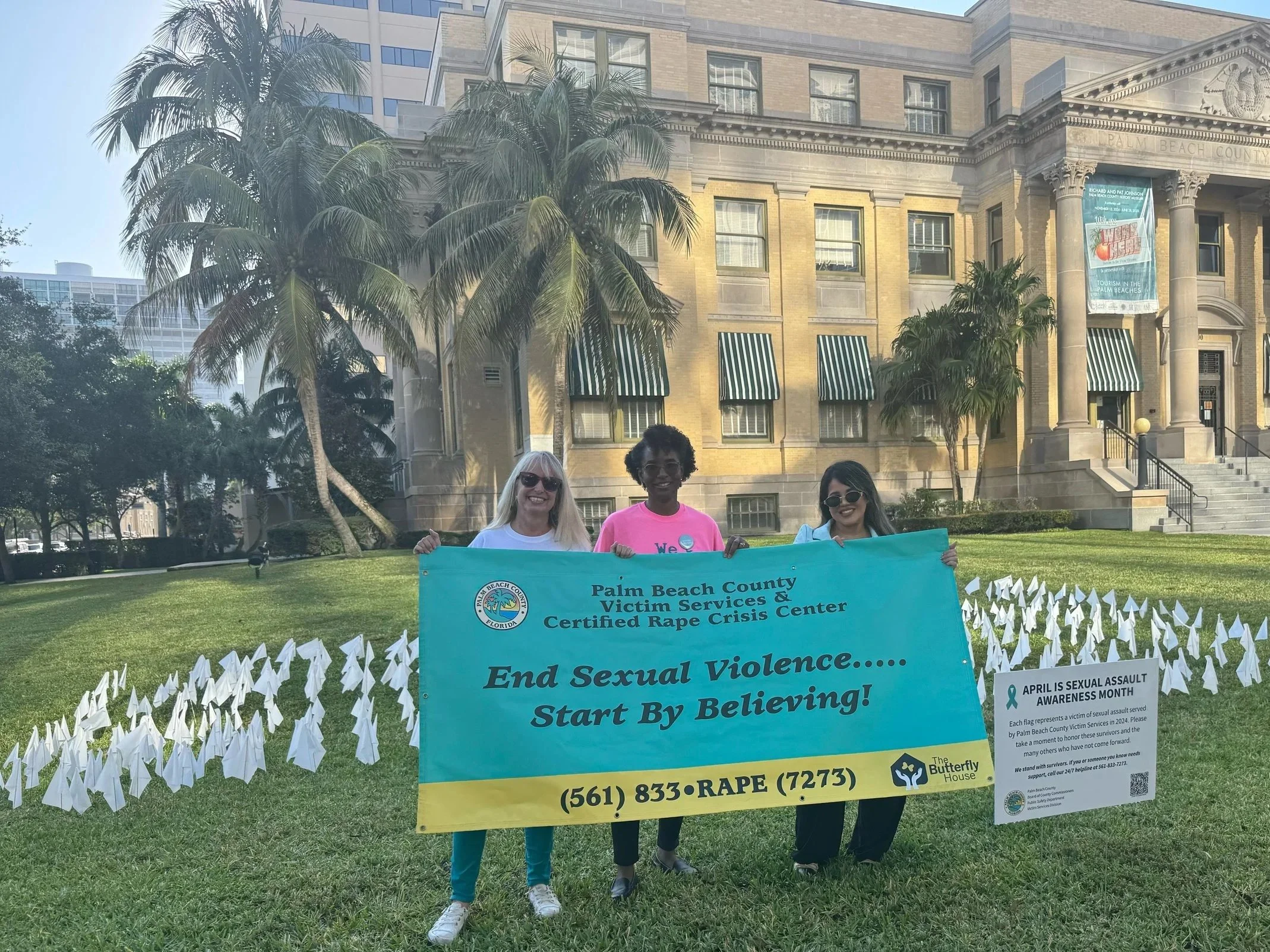
Over 550 flags in the ground to symbolize each victim in Palm Beach County who called in for services in 2025.
The Lasting Impact of Sexual Violence
Survivors of sexual assault may face significant emotional and psychological challenges. Research shows they are:
3 times more likely to experience depression
6 times more likely to develop Post-Traumatic Stress Disorder (PTSD)
13 times more likely to struggle with alcohol misuse
26 times more likely to struggle with drug abuse
4 times more likely to attempt suicide
Common Myths About Sexual Assault
Sexual assault is about anger, control, and domination—not sexual desire.
Understanding the facts is one of the most powerful ways to challenge harmful myths about sexual violence. Misinformation can discourage victims from seeking help and prevent communities from supporting survivors.
Myth: Rape and sexual assault are about sexual attraction and gratification.
Fact: Sexual assault is primarily about power, control, and domination—not sexual desire.
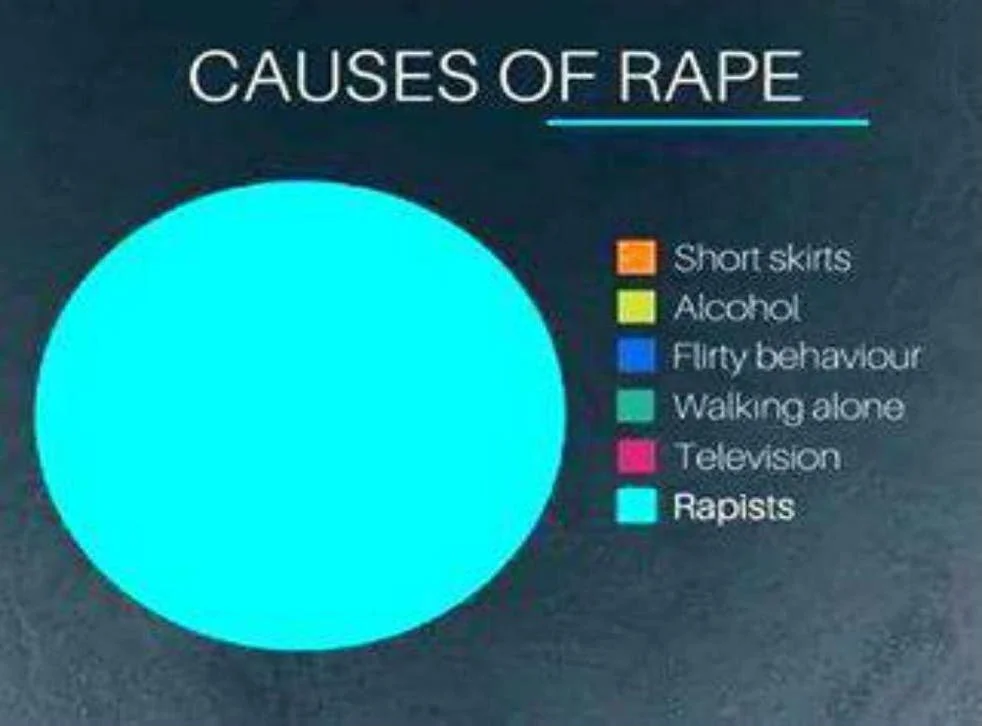
Myth: Healthy or strong people can resist being raped or sexually assaulted.
Fact: Anyone can be a victim of sexual violence. Survivors include doctors, lawyers, nurses, military personnel, students, parents, and people from every background. Sexual violence affects people of every race, gender, age, and sexual orientation. In the United States, 69% of sexual assault victims are between the ages of 12 and 34, and more than 4 out of 5 female rape survivors report that they were first assaulted before the age of 25. Sexual violence is not about weakness—it is about power, control, and opportunity.
Myth: Men can be provoked to a “point of no return.”
Fact: Men are physically able to stop at any point during sexual activity. People are responsible for their actions. Sexual assault is not an uncontrollable impulse—it is a deliberate act of violence.
Myth: Going to someone’s room or being on a date implies consent.
Fact: Nothing ever implies consent. Consent must be clearly given and can be withdrawn at any time.
Myth: Rape is usually violent and involves a stranger.
Fact: Most sexual assaults are committed by someone the victim knows, such as a partner, acquaintance, friend, or family member.
Myth: The way someone dresses causes rape.
Fact: Clothing, behavior, or appearance never cause sexual assault. Responsibility always lies with the perpetrator.
Myth: It isn’t rape if someone changes their mind during sexual activity.
Fact: Consent can be withdrawn at any time. Continuing sexual activity after someone says no is sexual assault.
Myth: If someone is drunk or high, they are responsible for what happens to them.
Fact: No one deserves to be sexually assaulted. Being under the influence never excuses the actions of the perpetrator. Consent must be given 100% of the time.
Myth: If a victim doesn’t fight back, it wasn’t rape.
Fact: People react to trauma in different ways, including freezing or complying in order to survive. Submission is not the same as consent.
Myth: Victims should forget the assault and move on.
Fact: Survivors deserve support and the opportunity to talk about their experience when they are ready. Silence can make recovery more difficult.
Myth: If two people have been intimate before, it cannot be rape.
Fact: Consent is required every time. A past sexual relationship does not equal ongoing consent.